
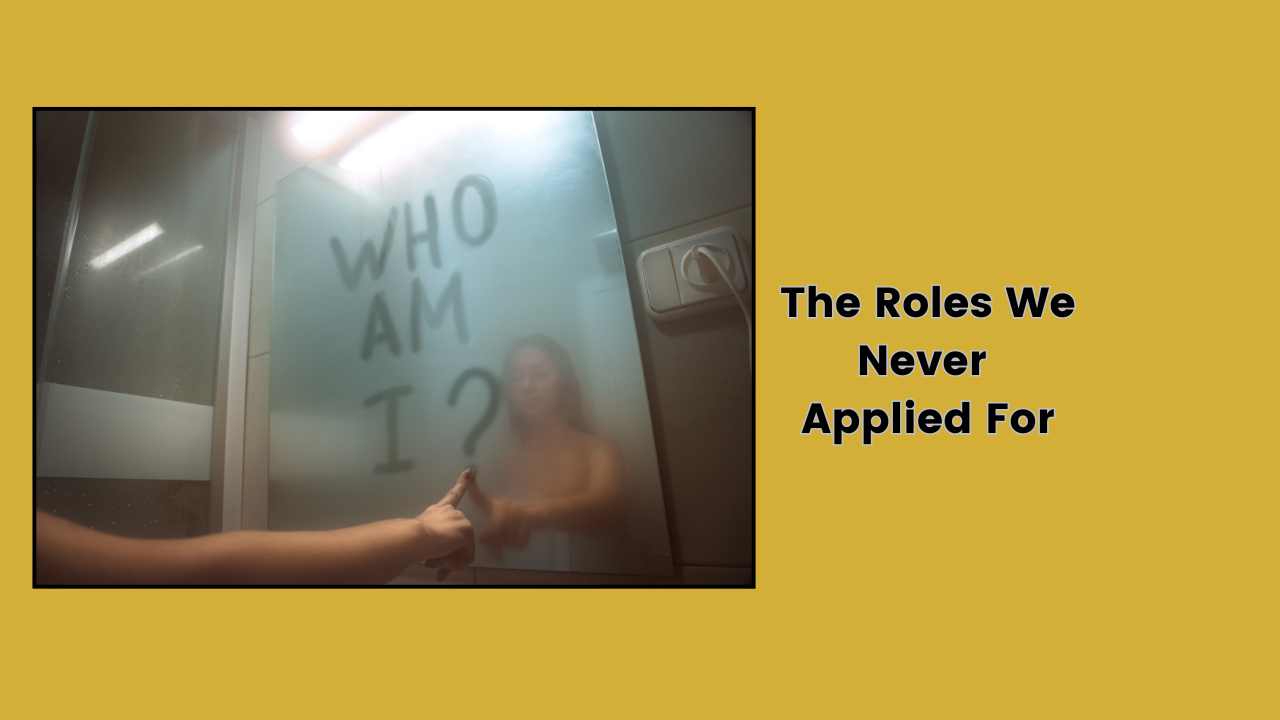
I sometimes wonder how many women are living lives built around roles they never consciously chose.
The strong one. The peacekeeper. The fixer. The responsible daughter. The dependable friend. The woman who always has it together. The one everyone turns to when life falls apart.
The strange thing is, nobody ever formally asked us if we'd like the job. There wasn't an interview. No contract. No discussion about whether we had the emotional capacity to carry it. One day, we simply found ourselves living it. And after a while, it stopped feeling like a role. It started feeling like who we were.
"Sometimes the greatest act of self-discovery isn't finding yourself. It's recognising the roles you've mistaken for your identity."
Looking back now, I can see that many of the things I believed were simply my personality were actually survival strategies. I wasn't always calm because I was naturally calm. Sometimes I was calm because conflict didn't feel safe. I wasn't always independent because I wanted to be. Sometimes I struggled to ask for help because somewhere along the way I'd learned that needing people wasn't an option. There's a difference. And understanding that difference changes everything.
Why This Happens
As children, we adapt remarkably quickly. We learn which version of ourselves receives praise. Which version avoids criticism. Which version keeps the peace. Which version makes life easier for the people around us.
Without even realising it, we begin performing. Not because we're being dishonest. Because we're trying to belong. Because belonging feels safe. Especially when the alternative feels uncertain.
Over time, those adaptations become identities. The helper. The achiever. The caretaker. The perfectionist. The woman who never asks for anything. Not because those roles reflect our truest selves, but because they once protected us. The problem is that what protects us as children can quietly imprison us as adults.
The Hidden Cost
Living through roles is exhausting because roles always require performance. They ask you to keep proving yourself. To keep earning your place. To keep living according to expectations that may no longer belong to you.
You become so focused on meeting everyone else's image of who you are that you rarely stop to ask yourself a simple question.
Who am I when nobody needs anything from me?
For many women, that question is surprisingly difficult to answer. Not because they don't have an identity. Because it's been buried beneath years of responsibility. Years of overgiving. Years of believing that being needed was the same as being valuable.
Eventually, the role begins making decisions for you. It influences the relationships you stay in. The opportunities you turn down. The boundaries you never set. The dreams you quietly convince yourself are unrealistic. Not because they are. Because they don't fit the role you've been living.
What Changes When You Begin Choosing Yourself?
The beautiful thing about healing is that it doesn't ask you to become someone else. It asks you to become more honest.
You begin noticing where you're performing instead of simply being. You start questioning whether your decisions are rooted in love or obligation. You become curious about the difference between who you are and who you've had to be.
And little by little, something shifts. You stop introducing yourself through your responsibilities. You begin recognising yourself through your values. Your joy. Your peace. Your voice.
The role becomes something you can choose rather than something that controls you. And that's where freedom begins.
Coming Home
Coming home to yourself isn't dramatic. In fact, it often feels surprisingly quiet.
It's noticing that you don't have to solve every problem. It's allowing someone else to experience the consequences of their own choices. It's resting without believing you've earned it. It's saying, "I can't do that today." And letting the sentence end there.
The woman underneath the role has been there all along. She hasn't disappeared. She's simply been waiting for you to realise that you were always more than the title you carried.
A Final Reflection
Perhaps this season of your life isn't asking you to become stronger. Perhaps you've been strong for long enough.
Perhaps it's inviting you to become freer. Freer to disappoint people occasionally. Freer to change your mind. Freer to ask for help. Freer to rest. Freer to choose yourself.
Because one day you may realise something extraordinary.
The role kept everyone else comfortable. But the woman beneath it... She's the one who finally gets to live.